

Introduction
In a world where sports cars are becoming increasingly digital, heavier, and packed with driver-assistance technology, the Alfa Romeo 4C stands as a refreshing reminder of what driving enthusiasts truly love: simplicity, passion, and raw performance. Produced between 2013 and 2020, the 4C captured the essence of Italian automotive engineering by focusing on lightweight construction and an engaging driving experience rather than outright horsepower.

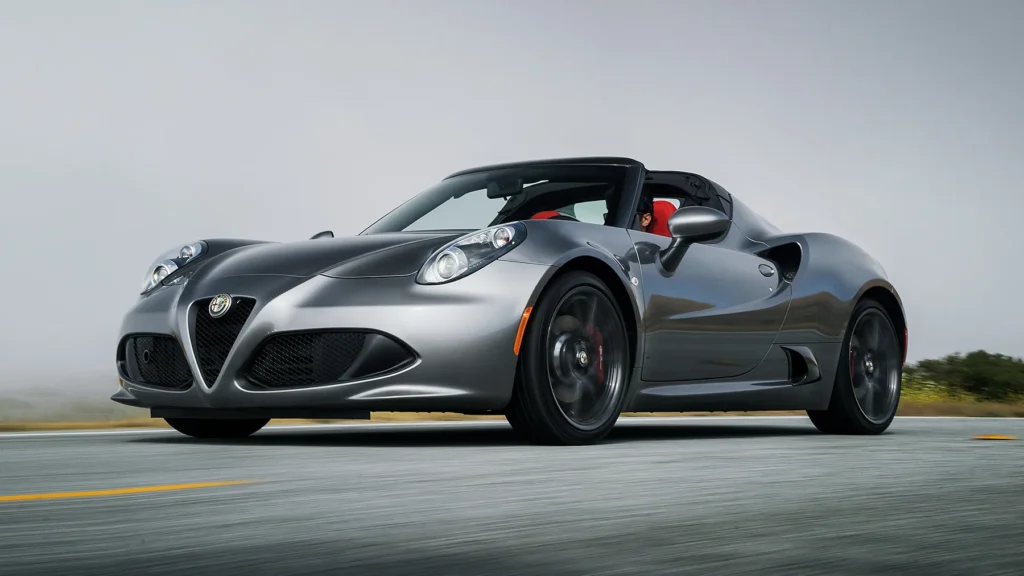
Even years after production ended, the Alfa Romeo 4C remains one of the most distinctive sports cars on the road.
Design: A True Italian Masterpiece
The Alfa Romeo 4C is impossible to ignore. Its sculpted bodywork, aggressive stance, and exotic proportions make it look more like a supercar than a compact sports coupe. Inspired by Alfa Romeo’s racing heritage, the 4C features flowing curves, dramatic air intakes, and a low-slung profile that attracts attention wherever it goes.
Unlike many modern sports cars that rely on oversized grilles and aggressive styling cues, the 4C achieves elegance and aggression in perfect balance. It’s a vehicle that feels special every time you walk toward it.
Lightweight Engineering at Its Finest
One of the 4C’s greatest achievements is its incredibly lightweight construction. At the heart of the car is a carbon-fiber monocoque chassis—a feature typically reserved for exotic supercars costing several times more.
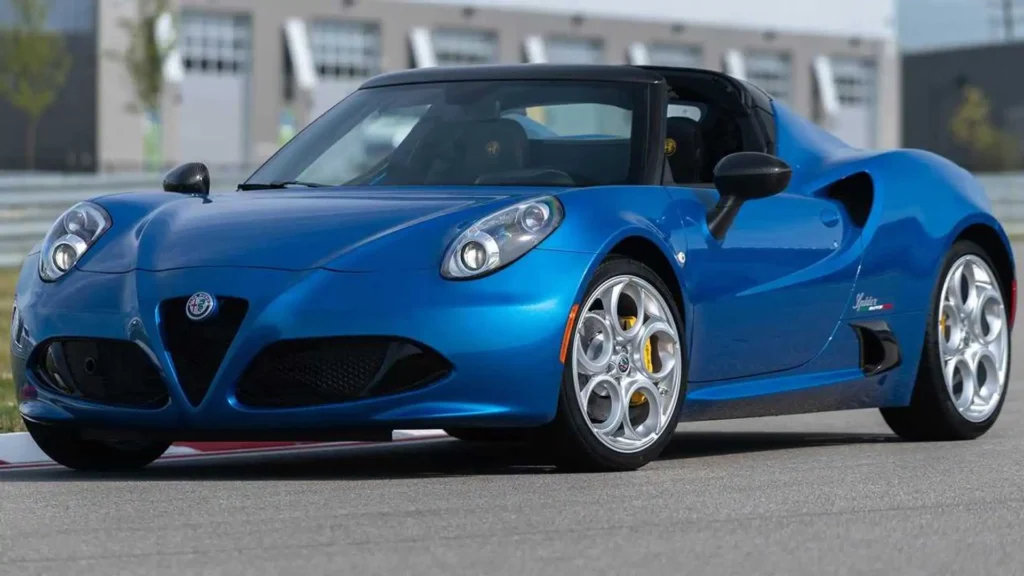
With a curb weight of around 2,500 pounds (1,134 kg), the 4C delivers exceptional agility and responsiveness. Every steering input, throttle application, and braking maneuver feels immediate and connected.
This commitment to weight reduction demonstrates Alfa Romeo’s dedication to performance through engineering rather than simply adding more power.
Performance: Small Engine, Big Excitement
Under the hood lies a turbocharged 1.75-liter four-cylinder engine producing approximately 237 horsepower. While that figure may seem modest by today’s standards, the car’s low weight allows it to accelerate from 0 to 60 mph in around 4.1 seconds.

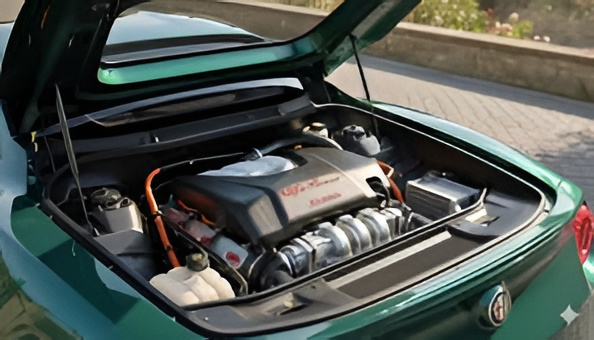
The engine is paired with a six-speed dual-clutch transmission that delivers quick shifts and impressive acceleration. The combination creates a driving experience that feels energetic, responsive, and engaging.
More importantly, the 4C offers something many modern sports cars struggle to provide: character. Every drive feels like an event.
The Driving Experience
The Alfa Romeo 4C was built for drivers who value connection over comfort. There is no power steering, which creates an incredibly direct relationship between the driver and the road. At higher speeds, the steering feels precise and rewarding, providing excellent feedback through corners.
The car’s chassis balance and mid-engine layout inspire confidence on winding roads and race tracks alike. Drivers often praise the 4C for delivering one of the purest driving experiences available in the modern era.
The Downsides
Despite its many strengths, the Alfa Romeo 4C is not perfect.
The ride quality can be harsh on rough roads, making long-distance journeys less comfortable than some competitors. Cabin space is limited, and storage options are minimal. Entry and exit can also be challenging due to the wide carbon-fiber door sills.
Additionally, the lack of modern comfort features may disappoint buyers looking for luxury and convenience.
However, many enthusiasts view these compromises as part of the car’s charm rather than significant drawbacks.
Reliability and Ownership
Like many Italian performance cars, the Alfa Romeo 4C has faced questions regarding long-term reliability. While it is generally more dependable than some older Alfa Romeo models, maintenance costs and parts availability can be concerns depending on location.

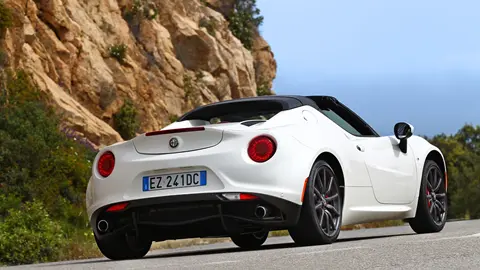
Prospective buyers should seek well-maintained examples with documented service histories. Fortunately, the car’s enthusiast following has helped create a supportive ownership community.
Why the Alfa Romeo 4C Matters
The automotive industry is rapidly moving toward electrification and automation. In this environment, the Alfa Romeo 4C represents a disappearing breed of sports car—one focused entirely on driver engagement.
Its lightweight carbon-fiber chassis, minimalist philosophy, and emotional driving dynamics make it a future classic. The 4C proves that excitement doesn’t require massive horsepower figures or advanced electronic systems.
Sometimes, less really is more.
Final Verdict
The Alfa Romeo 4C is not a sports car for everyone. It sacrifices comfort, practicality, and refinement in pursuit of driving purity. Yet those very compromises are what make it special.
For enthusiasts seeking an authentic, lightweight, and emotionally engaging sports car, the Alfa Romeo 4C remains one of the most compelling options of the last decade. It is a bold reminder that passion and personality still have a place in modern automotive design.
Rating: 8.8/10
Pros
- Stunning Italian design
- Carbon-fiber monocoque chassis
- Exceptional handling and agility
- Engaging driving experience
- Future collectible potential
Cons
- Limited practicality
- Firm ride quality
- Tight cabin space
- Minimal luxury features
- Maintenance can be expensive
The Alfa Romeo 4C may not be the most practical sports car, but it is undoubtedly one of the most memorable.